

Physics for pre-pre-preschoolers
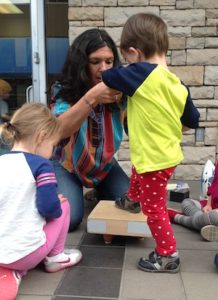 Another fall season of Big Kids Club for Preschoolers, and even though this is my third year leading classes, this September, I had a big surprise. Again.
We called the season #AllFallDown, and one of the biggest things to drop this season is the average age of the kids in my class. In the summer, it was 4.5, and now that all those Big Kids are in Kindergarten, the new crop of afternoon kids are all around 2.
My class is supposed to be about Physics, and forces, and engineering, and since our afternoon program of play and learning is inclusive (for “Big Kids of all ages”), we’ve been tackling the topic from its foundations.
In retrospect, I think I should have called this class “Anti-gravity,” or “Gravity defying,” since the rest of the lessons and experiments have all been about staying up. How strong are eggs? Did you know the curved shape helps to distribute the weight of heavy mama chickens, so they can sit on them without breaking?
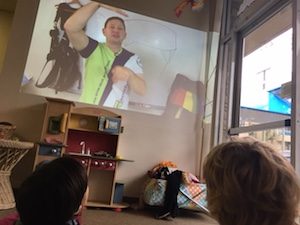
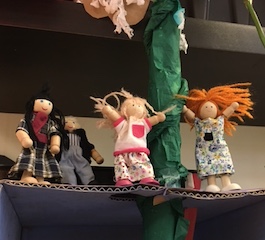
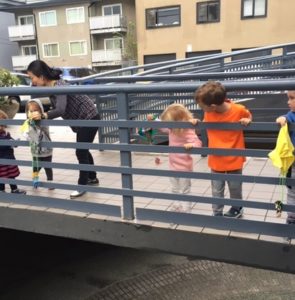
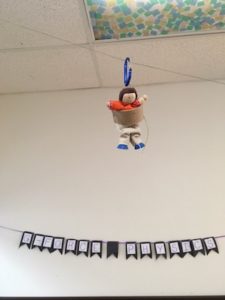
How else can we protect things from breaking? We watched videos on our new projector wall, and then set about testing our theories. On our gang of mini-crash-test-kids, who were strapped in, tossed out, and sent zipping down the lines, helping us to explore the wonders of drag (via parachute), slope, and velocity (a la zipline).
 |
 |
 |
 |
The classes are about experimentation, and that’s definitely been our experience!
There are more pics, and some slow-mo videos on our Instagram feed and you don’t have to have an account to see them! Just click here.
If you’re wondering, the eggs did break when Ron stood on top of them. The light-weight potato bag plastic parachute worked much better than the others, and the zipline works best with a steep slope. Maybe you could have guessed all three results, but the fun isn’t in finding the answers. It’s in the journey.
Join us next Friday when we discover even more amazing aspects of eggs. See you then.

